Comparison of Naive Bayes and KNN for Honey-Mumford Learning Style Classification in Interpersonal Skill
Komparasi Naive Bayes dan KNN untuk Klasifikasi Gaya Belajar Honey-Mumford pada Interpersonal Skill
Keywords:
Educational Data Mining, Learning Style, Honey-Mumford, Interpersonal Skill, Naive BayesAbstract
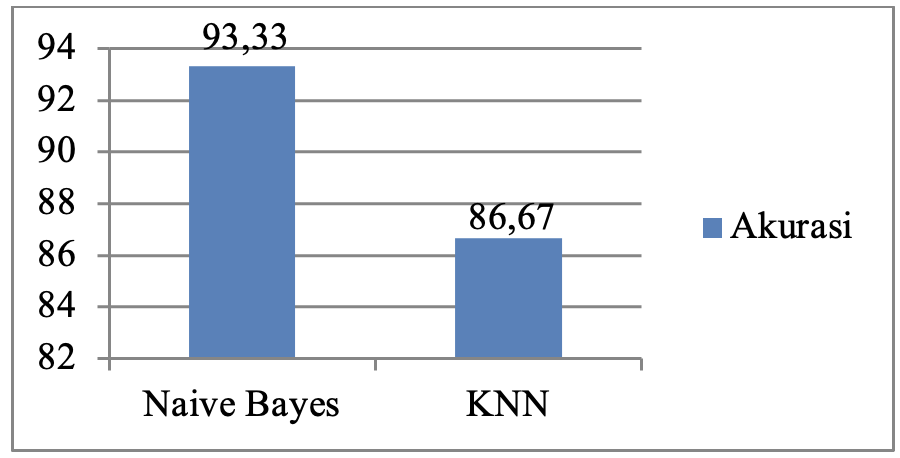
Developing soft skills competence, particularly interpersonal abilities, often presents a challenge for Informatics students accustomed to technical and structured thinking patterns. The mismatch between teaching methods and student learning preferences can hinder the absorption of non-technical material. This study aims to classify student learning style profiles in the Interpersonal Skill course using a Machine Learning approach based on the Honey-Mumford model (Activist, Reflector, Theorist, Pragmatist). The research methodology employs Educational Data Mining techniques by comparing the performance of Naive Bayes and K-Nearest Neighbor (KNN) algorithms in predicting learning styles based on academic history data and behavioral questionnaires. Experimental results indicate that the Naive Bayes algorithm outperforms KNN in recognizing student characteristic patterns, achieving an accuracy rate of 93.33%. These findings suggest that engineering students possess heterogeneous learning styles; therefore, adaptive and varied teaching strategies are essential to optimize the comprehension of soft skills materia.
References
[1] H. Moerti, K. W. Haryanto, and F. E. Andriyanto, “Aplikasi Informasi Tempat Pariwisata di Kabupaten Pasuruan Berbasis Android Menggunakan Metode RAD (Rapid Application Development),” J. Spirit, vol. 17, no. 1, pp. 98–106, 2025.
[2] A. S. Illahi, M. K. Setiyansyah, W. Mualim, and H. Moerti, “Perancangan Dashboard Kinerja Berbasis Web dengan Menggunakan Metode Key Performance Indicators Sebagai Monitoring Perkembangan Peforma Karyawan,” JOSIATI (Jurnal Sist. Inf. Apl. Teknol. Informasi), vol. 2, no. 1, pp. 45–57, 2025, doi: 10.53567/josiati.v2i1.35.
[3] V. Yuliza, N. Huda, and R. Junita, “Analisis kemampuan metakognitif dalam pemecahan masalah matematis ditinjau dari gaya belajar Honey-Mumford,” EMTEKA J. Pendidik. Mat., vol. 5, no. 2, 2024, doi: 10.24127/emteka.v5i2.5532.
[4] S. Sumarlin and D. Anggraini, “Data Mining Pendidikan: Prediksi Gaya Belajar Mahasiswa Teknik Menggunakan Machine Learning,” J. Teknol. Inf. dan Ilmu Komput., vol. 12, no. 3, pp. 563–572, Jun. 2025, doi: 10.25126/jtiik.2025129190.
[5] T. Gori, A. Sunyoto, and H. Al Fatta, “Preprocessing data dan klasifikasi untuk prediksi kinerja akademik siswa,” J. Teknol. Inf. dan Ilmu Komput., vol. 11, no. 1, 2024.
[6] Y. N. Rumbia and others, “Perbandingan metode KNN dan Naive Bayes untuk klasifikasi kelulusan mahasiswa pada mata kuliah Probabilitas dan Statistika,” J. PTI, vol. 12, no. 1, 2025, doi: 10.35134/jpti.v12i1.228.
[7] D. A. N. Wulandari, R. Annisa, L. Yusuf, and T. Prihatin, “Educational data mining for student academic prediction using K-Means and Naïve Bayes classifier,” J. Pilar Nusa Mandiri, vol. 16, no. 2, 2020, doi: 10.33480/pilar.v16i2.1432.
[8] M. Yağcı, “Educational data mining: prediction of students’ academic performance using machine learning algorithms,” Smart Learn. Environ., vol. 9, no. 11, 2022, doi: 10.1186/s40561-022-00192-z.
[9] N. Citroresmi and E. Susanti, “Kemampuan pemecahan masalah matematis siswa ditinjau dari gaya belajar teori Honey-Mumford,” JUMLAHKU J. Mat. Ilm., vol. 7, no. 2, 2021, doi: 10.33222/jumlahku.v7i2.1442.
[10] S. Ramadandi and Jahring, “Klasifikasi gaya belajar mahasiswa menggunakan metode Naïve Bayes classifier,” J. Teknol. dan Inf., vol. 10, no. 2, 2020, doi: 10.34010/jati.v10i2.3096.
[11] S. T. Sianturi and U. L. Yuhana, “Student behaviour analysis to detect learning styles using decision tree, Naïve Bayes, and K-nearest neighbor method in Moodle LMS,” IPTEK J. Teknol. dan Sains, 2025.
[12] H. N. Asmi, S. Risnanto, and O. B. Mohd, “Optimizing Naïve Bayes method for Felder–Silverman learning style model identification,” J. Tek. Inform., vol. 18, no. 1, 2025.
[13] L. Hanum, “Pengelompokan gaya belajar mahasiswa menggunakan metode K-Means dan validasi Davies–Bouldin Index,” J. Manajemen, Pendidik. dan Ilmu Komput., vol. 2, no. 2, 2025, doi: 10.65309/1x1b7f47.
[14] F. Rasheed and A. Wahid, “Learning style detection in E-learning systems using machine learning techniques,” Expert Syst. Appl., vol. 174, p. 114774, 2021, doi: 10.1016/j.eswa.2021.114774.
[15] Z. Mehenaoui, Y. Lafifi, and L. Zemmouri, “Learning behavior analysis to identify learner’s learning style based on machine learning techniques,” J. Univers. Comput. Sci., vol. 28, no. 11, pp. 1193–1220, 2022.
[16] I. Maulana, W. Witanti, and Melina, “Klasterisasi gaya belajar mahasiswa berbasis VARK dengan algoritma DBSCAN,” J. Algoritm., vol. 22, no. 2, 2025, doi: 10.33364/algoritma/v.22-2.2980.
[17] S. Samnur, F. R. Baharuddin, and J. R. Khairah, “Analisis gaya belajar online mahasiswa pendidikan teknik di era digital,” J. Mediat., vol. 6, no. 2, 2023, doi: 10.59562/mediatik.v6i2.1412.
Downloads
Published
How to Cite
License
Copyright (c) 2025 Hari Moerti, Hamzah Setiawan

This work is licensed under a Creative Commons Attribution 4.0 International License.